How To Make Electric Vehicle Ownership Easier
Choose the right electric vehicle for your daily routine with practical tips on range, charging, parking, commuting, household needs, and easy EV ownership.
Key Takeaways
- A dependable charging routine matters more than charging to 100 percent every night.
- Level 1, Level 2, and DC fast charging each serve different needs.
- Real-world range changes with weather, speed, terrain, cargo, and climate control use.
- EVs need less routine powertrain service, but tires, brakes, filters, and software still need attention.
- Total ownership cost depends heavily on local electricity rates, insurance, tires, and charging habits.
Electric vehicle ownership becomes much easier when the vehicle fits the way you actually drive, park, and travel. Instead of focusing only on maximum advertised range, start with your commute, overnight parking situation, household needs, and access to reliable charging. Drivers who want help matching an EV to their routine can learn more while comparing available options.
For many households, an EV is simply a car that starts each morning with enough energy for the day. The key is creating a practical system before buying, then using the vehicle’s charging tools, route planner, and maintenance schedule to make ownership feel predictable.
1. Build A Simple Daily Charging Routine
Begin with your average daily mileage, then leave room for unplanned errands, traffic, and changing weather. Many drivers do not need to plug in every night, especially when their normal driving uses only a modest portion of the battery. Charging every few days can work well if the remaining range stays comfortably above the next day’s expected miles.
Use scheduled charging if your vehicle and electric plan support it. A set departure time can warm or cool the cabin while the vehicle is plugged in, and overnight charging may fit lower-cost utility periods. The best routine is the one that gives you confidence without turning charging into a daily chore.
2. Choose The Right Home Charging Setup
Compare Charging Levels
- Level 1 charging: Uses a standard household outlet. It can suit short commutes, plug-in hybrids, and drivers who have plenty of time between trips.
- Level 2 charging: Uses 240-volt equipment and is often the most convenient choice for regular EV drivers who want to replenish more range overnight.
- DC fast charging: Delivers rapid charging at many public locations. It is useful for travel, but it is generally not a home charging solution.
Before installing permanent equipment, have a licensed electrician review the electrical panel, wiring path, outlet, or hardwired connection, and local permit requirements. The EPA explains that Level 1 and Level 2 home chargers fit different driving habits, so buying the highest-powered unit is not always necessary.
3. Plan for a Real-World Driving Range
An EPA range estimate is a useful comparison point, not a promise for every trip. Cold or hot weather, high speeds, steep grades, strong winds, heavy cargo, passengers, roof accessories, and cabin heating or air conditioning can all affect energy use. Plan to arrive with a practical reserve instead of trying to reach a charger with only a few miles remaining.


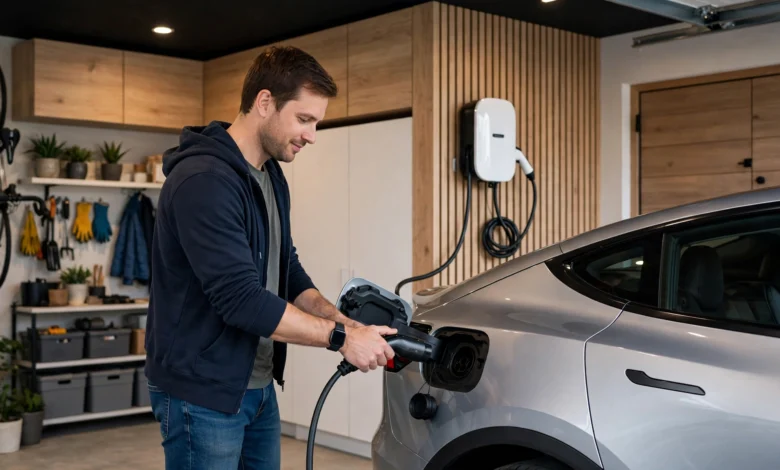
Photorealistic editorial image of a modern electric vehicle parked at a sleek home Level 2 charging station, charging cable connected, clean neutral garage background, soft controlled lighting, isolated polished commercial composition.
Use the vehicle’s predicted arrival charge as a guide, but watch how its estimates perform on your regular routes. After a few weeks, you will have a much better understanding of what range looks like during local winters, summer heat, highway travel, and stop-and-go traffic.
4. Prepare For Longer Trips
A Basic EV Road Trip Plan
- Enter the full route into the vehicle’s navigation system before leaving.
- Check charging stops for connector compatibility, operating hours, and nearby restrooms or food.
- Identify at least one backup charger before each planned stop.
- Expect weather, traffic, or a busy station to add time to the schedule.
- Charge earlier when conditions are uncertain rather than waiting for a very low battery level.
Public charging access can vary by region, and station reliability can change quickly. Check live status in your preferred charging app before making a long detour, and keep a second charging network account available when traveling outside familiar areas.
5. Keep Up With EV Maintenance
EVs have fewer moving powertrain parts and do not require oil changes, but they are not maintenance-free. Follow the manufacturer’s schedule for tire rotations, tire-pressure checks, brake inspections, cabin air filters, wiper blades, fluids, cooling-system service, and software updates.
Regenerative braking can reduce brake wear, yet brake components still need regular inspection. Tires deserve special attention because vehicle weight and immediate torque can affect tread life. The NHTSA notes that EV-specific tires support vehicle weight and performance, but every tire still needs proper inflation, rotation, and tread monitoring.
6. Track The Full Cost Of Ownership
A useful ownership budget includes more than the monthly payment. Consider the purchase price or lease payment, home charger installation, household electricity, public charging fees, insurance, registration fees, tires, scheduled service, and estimated resale value.
Your driving pattern changes the math. A driver who charges overnight at home may have a very different experience from someone who relies on paid fast charging several times a week. Review your electric bill, ask about time-of-use rates, and calculate costs using your normal monthly mileage rather than a broad national average.
7. Care For The Battery
- Follow the charge limit and battery guidance in the owner’s manual.
- Avoid leaving the battery at extremely high or low charge levels for extended periods when practical.
- Use preconditioning before fast charging when the vehicle provides it.
- Park in a garage or shade during severe heat when convenient.
- Install software updates that may improve charging, thermal management, or range predictions.
Battery life depends on chemistry, climate, mileage, vehicle design, and charging behavior. Review the specific battery warranty before purchase, including the covered term, mileage limit, and any stated capacity-retention standard.
8. Use A Smart EV Buying Checklist
- Can it handle the normal commute with a comfortable range reserve?
- Can you charge at home, work, or a nearby dependable location?
- Does it meet passenger, cargo, towing, and seasonal driving needs?
- Does it work with the connectors available on your usual travel routes?
- Are service locations and warranty support convenient?
- Have you estimated the likely electricity, insurance, tire, and installation costs?
Conclusion
Electric vehicle ownership is easiest when charging, range, maintenance, and costs are planned around daily life. Choose a vehicle that suits your real commute and parking situation, build in range reserves, and treat public fast charging as a travel tool rather than your only option. With a routine that matches your needs, an EV can become one of the simplest vehicles in the household to operate.